

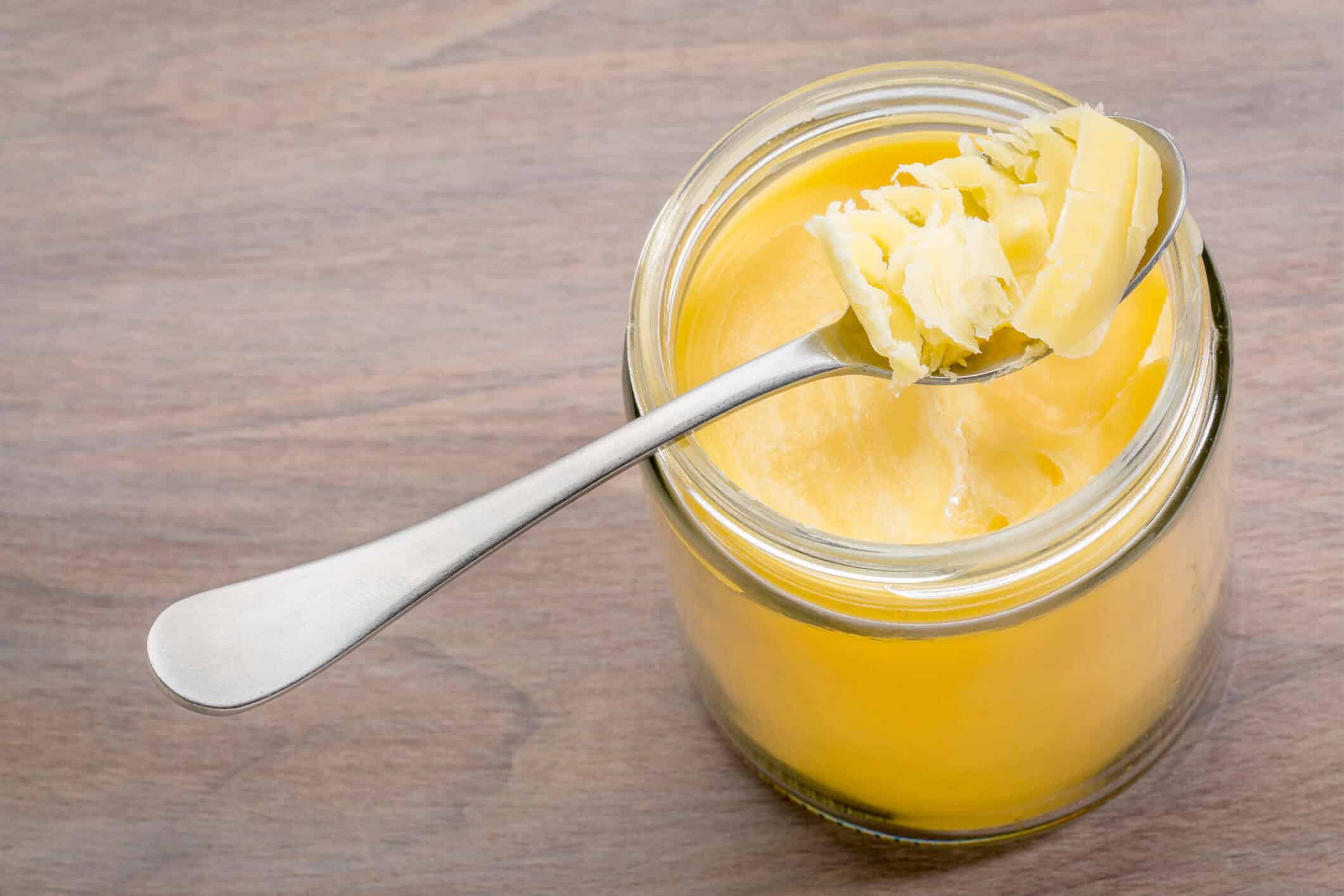
Now, let’s get to know about fats and their role in diet plans. “FATS!!! NO WAY!!! I am never consuming fats on my diet! “, the most frequent phrase I hear. It is just a myth that fats cannot be consumed on a specific diet, the truth is you should consume fats, just you have to be aware of what type and the quantity of fats are you consuming during your diet.
To understand the fatty acid composition in ghee, a study was performed. It has been found that a good source of DHA (docosahexaenoic acid) is ghee. The most common omega 3 fatty acid is DHA. Omega 3 is the important fat we need to eat from our diet as it can not be produced by our body. Some strong sources of omega-3 fatty acids are walnuts, fish oil and flaxseeds. The risk of such disorders such as cancer , heart attack, insulin resistance, arthritis and ADHD (attention deficit hyperactivity disorder) may be minimised by DHA.
Together with vitamins A, D , E and K, butyric acid in ghee helps increase immunity, promotes gut health, helps to keep your hair healthy, strengthens your bones and improves eye health. Ghee makes our system stronger and removes toxins. In addition, ghee enhances digestion, boosts immunity, balances weight, encourages healthy pregnancy, protects arteries.
It can be great for weight loss, since ghee is rich in omega 3 fats (DHA) and omega 6 (CLA). Omega 6 fats have been shown to increase the mass of the lean body while decreasing fat mass. Ghee helps to mobilise fat cells to be burned for energy. Ghee is packed with essential amino acids that can reduce the size of fat cells, experts have also found. It can be beneficial to add ghee if your body quickly accumulates fat. Omega 3 fatty acid in ghee can also help you lose inches and eventually help you shed those extra kilos.
One-two small spoons of ghee is the advisable amount daily. It is advised to have ghee if you are trying to lose weight mainly because it’s rich in amino acids and helps to shrink the size of fat cells, says Dr Mansi Chatrath, Nutritionist.